

With cuts to government funding taking a toll on the nonprofit sector, many organizations are filling funding gaps by turning to grantmakers, such as private and family foundations. But greater need means less funding to go around for nonprofits. According to the State of Grantseeking report, nonprofits cite competition for funding as one of their top three challenges.
To stand out in this crowded landscape, your nonprofit must do more than just tell compelling stories. You need to use data to demonstrate to grantmakers that investing in your organization is a wise choice.
Artificial intelligence (AI) has become a support tool in this undertaking. By utilizing predictive modeling, nonprofits can move beyond guesswork to make strategic, data-driven decisions that set their fundraising programs up for long-term success.
Explore how predictive modeling works and three specific models you can use to demonstrate to funders that your nonprofit is a reliable, stable partner.
How does predictive modeling work?
According to BWF’s predictive AI guide, this kind of modeling “is a type of artificial intelligence that uses data, statistical algorithms, and machine learning to anticipate future outcomes based on past data trends.” Predictive modeling enables nonprofits to make informed, data-driven decisions, strengthen relationships with grantmakers, and enhance fundraising effectiveness, ultimately maximizing their impact and advancing their mission.
To develop accurate predictive models, you’ll need to use two types of data:
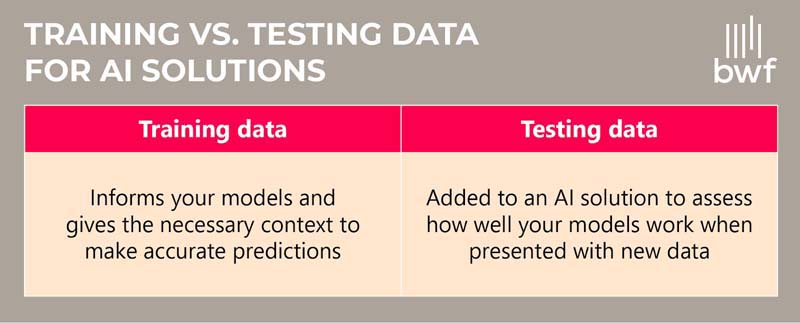
Training data is added to your models to help inform them, provide necessary context, and tailor them to your specific needs. For example, let’s say you are creating a model to predict which private foundations are most likely to award a multi-year capacity-building grant. Your training data would include historical information about past successful applications, as well as publicly available data on foundations that historically prioritized long-term organizational health over one-off projects.
Testing data is added to the models to assess the accuracy of their predictions when presented with new information. Building on this example, you could input data from a list of 50 new potential foundations you have never approached before. By seeing if the model correctly identifies the foundations that have a history of funding your specific need, you can verify its accuracy. This ensures that when you reach out to a funder, you are doing so because the data suggests a high probability of a mutually beneficial partnership, rather than simply taking a chance.
It’s helpful to clean your nonprofit’s database before starting predictive modeling. This ensures the information you feed into your models is updated, accurate, and robust. We also recommend working with an AI fundraising consultant who can help you leverage best practices when getting started with predictive modeling.
Once you understand the mechanics of these models, you can apply them to three specific areas that directly address the most common concerns grantmakers have: community buy-in, operational efficiency, and long-term viability.
Types of predictive models that demonstrate reliability to grantors
Let’s explore three modeling strategies you can use to show potential grant funders that your organization is aligned with their mission and worthy of their support.
1. Demonstrate community investment through giving behavior models
Grantors want to know that your community has bought into your nonprofit’s mission. Use giving behavior models to demonstrate to funders that your nonprofit understands its community’s needs and support base.
Specific metrics to measure through giving behavior modeling include:
- New donor acquisition: Measures the rate at which your nonprofit brings new donors on board.
- Recurring giving: Evaluates the number of donors who become ongoing supporters rather than one-time givers.
- Giving channel preference: Identifies donors’ preferred giving methods, including online, in-person, or direct mail.
- Likelihood of renewal: Determines how likely donors are to continue giving to your organization year after year.
- Next gift amount: Evaluates how much donors are likely to give the next time they donate.
- Campaign priorities: Defines which specific fundraising campaigns donors are likely to prioritize.
For a funder, these metrics aren’t just fundraising stats, but reliable indicators of social proof. They prove that if a foundation invests in your program, they are joining a movement that already has local momentum.
2. Demonstrate your likelihood of success through grant giving models
One of the greatest challenges for grantmakers is managing “grant noise,” or the influx of applications that don’t fit their criteria. Funders want to know that your nonprofit isn’t just chasing the money but has a data-backed reason for applying and that your cause aligns with the funder’s mission and values.
By using a grant giving model, you can measure your likelihood of winning certain grants and your anticipated share of overall funding. This type of predictive modeling allows your nonprofit to only apply for grants where it has a high likelihood of success based on historical data.
By using predictive modeling to filter your applications, you can improve your own ROI and show your commitment to practicing grantee responsibility. This helps ensure that the limited time a foundation’s program officer spends reviewing applications is spent on a proposal with a high statistical likelihood of achieving the specific impact goals of the foundation. You’ll tell funders: “We are using AI responsibly to ensure we only spend your time and ours on applications where our mission and your priorities are a perfect match.”
3. Demonstrate long-term sustainability through scoring models
Grantmakers often ask: “What happens to this program when our funding ends?” Scoring models provide a quantitative answer to that question by proving you have a pipeline of individual support ready to sustain your work.
Types of scoring models that are particularly interesting to grant funders include:
- Engagement scoring: Measures how engaged donors are with your organization through various metrics, including email open rates, event attendance, and social media engagement.
- RFM segmentation: Helps group donors based on their gifts’ recency, frequency, and monetary amount.
- Estimated giving capacity: Assesses how much donors are capable of giving based on wealth metrics (including stock and real estate ownership, past donation amounts, etc.) and warmth metrics (a personal connection to your cause, a history of involvement as a donor, board member, or volunteer, etc.)
- Grateful patient scoring: A model used in healthcare fundraising to help determine which former patients are most likely to engage with certain fundraising appeals or campaigns.
These models help pinpoint the specific donors who will drive future campaigns to success, whether it’s your annual giving campaign or a major capital campaign. As a result, you can focus more of your time and resources on soliciting those highly valuable and engaged supporters, helping to drive a higher return on investment (ROI) for each campaign.
Scoring models essentially serve as a de-risking tool for grantmakers. By showing a projected pipeline of individual donors through engagement and RFM scores, you’ll provide a data-backed transition plan, proving that the program won’t collapse once the grant period ends.
Predictive modeling is often discussed as a way to increase revenue, but its true power in the modern grantmaking ecosystem lies in its ability to build transparency. When you lead with data-backed research, you move the conversation from “we hope this works” to “we have the infrastructure to ensure this works.” Leveraging these three types of modeling empowers you to present a compelling case to grant funders, demonstrating that a partnership with your organization is a secure investment in a sustainable program.
About the Author
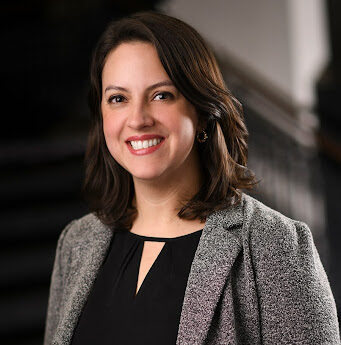
Allison Gannon, BWF’s Head of Revenue Operations, is inspired by the fact that billions of dollars are raised annually in the U.S. because people rally around an important mission to create action and change. Using her 8+ years of experience, Allison engages with current and prospective clients to identify the best solution to achieve their goals, empowers the BWF team to ensure they are successful in all their endeavors, and coordinates with industry partners to develop the best services for our clients and the sector. With innovative vision and passion, Allison leads a team focused on client experience, marketing, business development, and strategic partnerships.